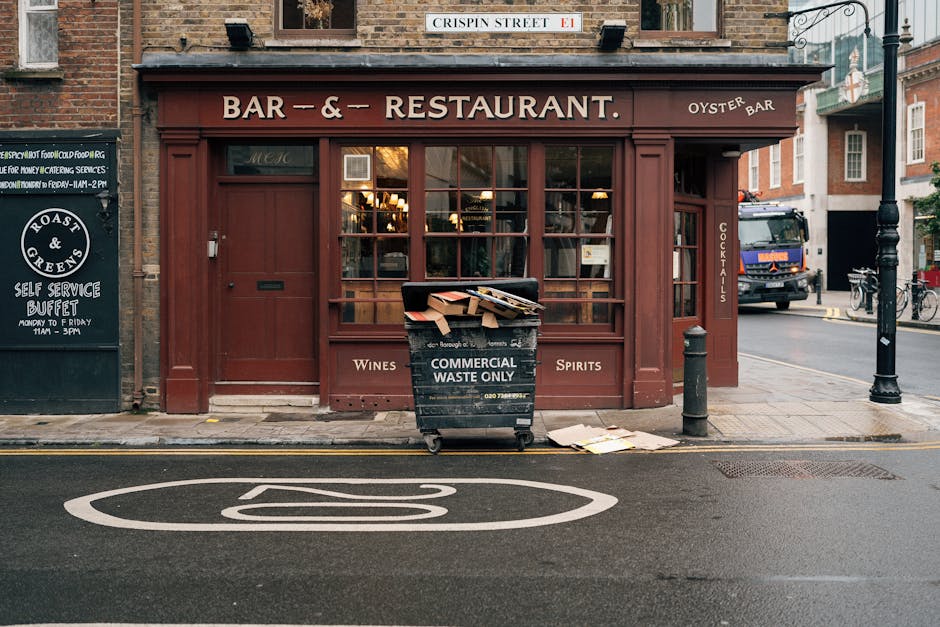
Acton High Street commercial rubbish removal for businesses
If you run a shop, cafe, salon, office, takeaway, studio, or small warehouse near Acton High Street, waste has a habit of turning up faster than you expect. Cardboard stacks beside the till. Broken display fittings. Old office furniture. Packaging after a delivery rush. Before long, the back room looks more like a storage problem than a place of work. That is where Acton High Street commercial rubbish removal for businesses becomes genuinely useful: it keeps your premises clear, presentable, and workable without turning waste clearance into a weekly headache.
In practical terms, commercial rubbish removal is about more than simply "taking stuff away". It is about choosing the right method for the type of waste you produce, the access you have, the time window you can spare, and the level of disruption you can tolerate. Done well, it saves time, helps you stay organised, and reduces the risk of fly-tipping, blocked access, or a messy first impression when customers walk in. And let's face it, nobody wants to open up on a Monday morning to a mountain of flattened boxes leaning into the fire exit.
This guide explains how it works, who needs it, what to watch out for, and how to choose the most sensible approach for a business on or near Acton High Street. It also covers compliance basics, practical comparisons, and a real-world example so you can make a confident decision rather than a rushed one.
Table of Contents
- Why it matters for Acton High Street businesses
- How commercial rubbish removal works
- Key benefits and practical advantages
- Who this service is for and when it makes sense
- Step-by-step guidance
- Expert tips for better results
- Common mistakes to avoid
- Tools, resources and recommendations
- Law, compliance, standards and best practice
- Options, methods and comparison
- Case study or real-world example
- Practical checklist
- Conclusion
- Frequently asked questions
Why Acton High Street commercial rubbish removal for businesses Matters
Acton High Street is the kind of place where space matters. Businesses often operate from compact units, shared yards, rear access lanes, or tightly timed loading areas. Waste can build up quickly because there is little room to hide it. One or two bulky items might be manageable. A week of packaging, broken fixtures, and end-of-fit-out debris is a different story entirely.
The real issue is not just tidiness. Poor waste handling affects day-to-day trading. Staff spend time moving rubbish instead of serving customers. Stock rooms become hard to use. Fire exits can get cluttered. Deliveries become awkward. If your front-of-house or pavement-facing area looks neglected, people notice. They may not consciously think, "That business has poor waste management," but they will feel it. Small thing? Maybe. But small things shape trust.
There is also a safety angle. Loose waste can create trip hazards. Sharp packaging straps, broken glass, and damaged shelving are not just annoying; they are the kind of things that cause avoidable problems. For hospitality and retail in particular, a clear waste strategy helps the place feel calmer and more professional, especially during busy periods.
Commercial rubbish removal also matters because business waste is not the same as domestic waste. Waste from a business generally needs to be handled as commercial waste, with the right transfer process and the right documentation where applicable. That may sound dry, but in plain English it means you need a service that understands business needs rather than treating your rubbish as if it came from a house clearance.
Key takeaway: if your business produces regular packaging, bulky items, or mixed commercial waste, having a proper removal plan is not a luxury. It is part of running the site smoothly.
How Acton High Street commercial rubbish removal for businesses Works
Most commercial rubbish removal jobs follow a fairly straightforward pattern, although the detail depends on the site. Some businesses need a one-off clear-out. Others need repeat collections. A few need urgent same-day support after a refit, delivery issue, or stock-room clean-up. The basic process is similar either way.
Typical process
- Assessment of waste type and volume. This helps determine whether the job is mainly general waste, recyclable material, bulky items, or mixed commercial rubbish.
- Access check. A good provider will think about loading restrictions, stairs, narrow corridors, basement storage, rear access, and whether the waste needs to be carried through customer areas.
- Collection method chosen. That might be manual loading, a van collection, skip hire, wait-and-load, or a grab-type service depending on the site and the waste.
- Loading and removal. The waste is removed with minimal disruption where possible. For busy high street premises, timing matters more than people realise.
- Sorting and disposal. Waste should then be separated and sent to the relevant disposal or recycling route, where appropriate.
- Paperwork or confirmation. Businesses should expect a record or receipt of collection, especially if they are keeping proper waste records.
There are also practical differences between one-off and ongoing arrangements. A one-off clearance suits fit-outs, stock-room clear-downs, or seasonal reset work. Regular removal is better for cafes, convenience stores, salons, offices, and other businesses where waste creeps up week after week. Slow build-up is the sneaky one, truth be told.
If your site has awkward access, it may be more efficient to use a collection method that avoids leaving a container in place for days. In some cases, a same-day or wait-and-load approach can be cleaner and simpler than parking a skip outside. For larger clearances, a dedicated commercial skip arrangement may make more sense, especially if the waste is heavy or recurring.
One useful detail many businesses overlook: the best method is not always the cheapest on paper. It is the one that fits your site without interrupting trading. A slightly more expensive option can be the better commercial decision if it saves staff time and avoids operational disruption.
Key Benefits and Practical Advantages
The benefits of organised business rubbish removal are not abstract. You notice them in day-to-day working conditions almost immediately.
- Cleaner customer-facing spaces. A tidy front area sends the right signal, especially for shops and hospitality venues.
- Better use of storage space. When waste is removed promptly, stock rooms and back-of-house areas stay functional.
- Less staff distraction. Your team can focus on work rather than acting as ad hoc waste movers.
- Reduced health and safety risks. Fewer obstacles, fewer trip hazards, fewer sharp edges waiting to catch someone out.
- More flexible operations. You can clear old fixtures, packaging, and equipment when needed, not when the mess becomes unbearable.
- Improved recycling outcomes. Good sorting can divert cardboard, metal, wood, and certain other materials away from general waste.
- Better first impressions. This matters more than people admit. Customers, suppliers, and landlords all notice how a site is kept.
There is also a commercial upside. An organised waste process reduces the chance of emergency clearances, which are often more stressful and less efficient. Regular, planned removal usually works better than a frantic clear-out on the eve of an inspection, a delivery, or a lease handover.
For businesses near Acton High Street, speed and reliability are often just as valuable as price. If waste is blocking your loading area at 8 a.m., that is not a theoretical problem. That is your trading day being squeezed.
Who This Is For and When It Makes Sense
Commercial rubbish removal is useful for a wide range of businesses, but it is especially relevant if you have limited storage, a busy turnover of packaging, or regular changes to your premises. Some sectors need it more often than others.
Common business types that benefit
- Retail shops dealing with cardboard, broken display pieces, old shelving, and delivery packaging.
- Cafes, takeaways, and restaurants managing back-of-house clutter, worn furniture, and bulky disposables.
- Offices clearing old desks, chairs, filing cabinets, and confidential waste.
- Salons and clinics replacing fixtures, packaging, and general non-hazardous waste.
- Trades and fit-out teams generating mixed site waste during refurbishments or installations.
- Warehouses and storage units with surplus stock, damaged goods, and packaging waste.
It also makes sense if you are moving premises, closing a unit, refreshing a workspace, or dealing with a sudden accumulation after a busy season. A lot of business owners wait until the clutter becomes visually annoying before doing anything. That works, sort of, until it starts getting in the way of real operations.
If the waste includes specialist items such as fridges, appliances, confidential papers, or potentially hazardous materials, you may need a more tailored route. In those cases, the exact waste type matters as much as the volume. A sensible provider will talk through that with you rather than just saying yes to everything. That is a good sign, by the way.
If your business is considering a more structured approach to rubbish management, it can also be useful to look at broader support options such as commercial skip hire or office clearance, depending on how much waste you generate and how often you need it removed.
Step-by-Step Guidance
If you want a cleaner, smoother process, it helps to think through waste removal before the piles form. Not glamorous, admittedly. But effective.
1. Identify the waste stream
Start by separating the waste into rough categories: cardboard, mixed general rubbish, bulky furniture, fixtures, wood, metal, and any items that need special handling. This is not about becoming a waste auditor overnight. It is simply about avoiding surprises later.
2. Estimate the volume honestly
Businesses often underestimate how much waste they have. A few broken shelves, some packaging, a desk or two, and suddenly the amount is much bigger than expected. If you are unsure, it is better to overestimate slightly than to book too small a collection and need a second visit.
3. Check access and timing
Ask yourself some practical questions. Can a vehicle stop nearby? Is there rear access? Will waste need to be moved through public areas? What time of day causes the least disruption? On a busy high street, timing can make a huge difference. Early morning or quieter mid-afternoon slots are often easier, depending on the business.
4. Decide on the right collection method
You may need a skip, a van load, a wait-and-load service, or a more specialised clearance. There is no single perfect option. The right choice depends on waste type, space, and urgency.
5. Prepare the waste properly
Keep recyclable material separate where practical. Remove anything that should not be mixed in. If you have flat-pack cardboard, break it down. If you have bulky items, make sure staff know where they will be placed for collection. A little preparation saves real time.
6. Confirm documentation and disposal route
Businesses should make sure waste is handled by a legitimate operator and that appropriate records are provided. The paperwork may feel dull, but it matters. It shows you have taken the waste transfer side of things seriously.
7. Review the process after the job
Once the waste is gone, ask what worked and what did not. Could the collection have been timed better? Was there a smoother access route? Was cardboard building up because deliveries were not being broken down soon enough? Small process changes can prevent the same mess repeating next month.
Expert note: the best waste clearance is usually the one you barely notice happening. If staff can keep working, customers barely see disruption, and the area is clear again by the end of the day, that is a very good result.
Expert Tips for Better Results
After enough commercial clearances, a few patterns become obvious. The businesses that get the best value are usually not the ones with the fanciest planning. They are the ones that simply get a few basics right.
Keep a waste corner
Even in a small unit, designate a clear area for waste waiting to go. It stops cardboard and packaging from spreading across the floor. Sounds simple. It is simple. And it works.
Use delivery days wisely
If your deliveries arrive in bursts, plan waste removal shortly after those peak times rather than before them. There is little point clearing a space and then filling it again two hours later.
Train staff on what goes where
Confusion is expensive. If staff are unsure whether a broken chair, old printer, or stack of packaging should be kept, separated, or removed, waste becomes clutter almost immediately. A short internal rule sheet can help.
Think seasonally
Retailers, hospitality venues, and offices often generate extra waste at specific times of year. If you know the pattern, you can book ahead instead of waiting for the inevitable "we really need this gone by tomorrow" moment. We have all seen that moment.
Match the service to the material
If most of your waste is lightweight but bulky, you may not need the same solution as a site producing heavy mixed debris. For example, a refurbished shop might benefit from wait-and-load skip hire, while a back-office clearout may suit man and van collection. The more closely the service matches the waste, the less friction you tend to get.
Do not ignore recyclables
Cardboard and packaging can stack up fast on Acton High Street, especially in busy retail and food-service settings. If you separate those materials early, the rest of the job becomes far cleaner and easier to manage.
Common Mistakes to Avoid
The most common issues are usually practical, not dramatic. But they cost time and money all the same.
- Leaving waste too late. Waiting until the back room is overflowing makes the job harder and often more expensive.
- Choosing the wrong method. A skip is not always best. A van collection is not always best either. Fit matters.
- Ignoring access problems. A service that looks cheap on paper can become awkward if vehicles cannot get close enough.
- Mixing unsuitable waste together. Some items need separate handling. Don't toss everything into one pile and hope for the best.
- Forgetting paperwork. Businesses should keep the right records for commercial waste disposal.
- Underestimating volume. This is the classic mistake. "It's only a few things" has a funny way of turning into a full load.
- Not planning around trading hours. If waste removal blocks your customer entrance or delivery bay, the whole point is lost.
Another one worth mentioning: assuming that all rubbish removal services deal with commercial waste in the same way. They do not. Business waste has different expectations around sorting, handling, and recordkeeping. It pays to ask the question early rather than sorting it out after the fact.
Tools, Resources and Recommendations
You do not need a complicated toolkit to manage commercial waste well. A few simple habits and items can make a large difference.
Useful basics for most businesses
- Clearly labelled bins or holding areas for cardboard, general waste, and reusable items.
- Heavy-duty bags or boxes for loose waste that would otherwise spread out.
- Simple internal waste guide so staff know what should be separated.
- Measuring tape or rough volume estimate for planning collections.
- Photo record of the waste pile before collection, helpful when comparing options or rebooking later.
- Basic access notes such as gate codes, loading restrictions, or rear entry instructions.
For businesses with regular clearances, it may be worth keeping a recurring waste log. Nothing fancy. Just a note of what tends to accumulate, how quickly, and after which activities. After a few weeks, a pattern usually appears. That is the point where better planning starts saving real effort.
If your waste includes bulky furniture or old equipment, you may also find related services useful, such as general rubbish removal, office clearance, or builders waste removal for trade-related jobs. Choosing the closest fit usually gives the smoothest result.
For businesses with sensitive paperwork, confidential shredding may be a better companion service than simply putting documents in mixed waste. That small distinction matters more than people think.
Law, Compliance, Standards and Best Practice
When commercial waste is involved, compliance is not just a background detail. It is part of responsible business operation. The exact obligations can vary depending on the waste type and the setup of your premises, so it is wise to work carefully and not guess.
In general, businesses should make sure their waste is passed to a legitimate carrier or collector, and they should keep records where required. Mixed commercial waste, recyclable materials, and specialist items may all need different handling. If you are uncertain about whether an item is suitable for general collection, it is better to ask before loading it up.
Best practice usually includes:
- Keeping waste separate where practical. Cardboard, recyclables, and bulky items are often easier to manage when sorted early.
- Using appropriate containers. Overfilled sacks and unstable piles create avoidable risks.
- Maintaining clear access. Fire routes, doors, and loading points should not be blocked.
- Keeping records of collections. This is especially important for businesses that need a traceable waste trail.
- Handling special items carefully. Appliances, electronic items, and certain potentially hazardous materials may need a different route.
There is also a common-sense side to this. Even where a rule is not directly visible to the customer, a neat and organised waste process supports safety and professionalism. That alone is reason enough for many businesses to treat it properly.
If your premises have ongoing waste-handling questions, the wider business policies on safety, payments, and service terms are worth reviewing too. For example, the company details on health and safety policy, insurance and safety, and terms and conditions can give you a clearer picture of how a provider works. Not thrilling reading, no, but useful.
Options, Methods and Comparison Table
There is more than one way to clear business waste on or near Acton High Street. The best choice depends on speed, access, waste type, and how much disruption you can tolerate.
| Method | Best for | Strengths | Trade-offs |
|---|---|---|---|
| Commercial skip hire | Ongoing waste, heavier loads, site work | Good capacity, simple for repeated disposal | Needs space, may require permits or careful placement |
| Wait-and-load | Busy streets, limited space, quick clearances | Fast, avoids leaving a skip on-site | Needs waste to be ready at the agreed time |
| Man and van collection | Smaller business clear-outs, mixed light waste | Flexible, useful for awkward access | Less suitable for very bulky or heavy waste |
| Grab-style collection | Bulk materials, larger clearances, site debris | Efficient for heavier or larger volumes | Not always ideal for tight high street access |
| Office or shop clearance | Fixtures, furniture, end-of-tenancy clear-outs | Good for full room or unit resets | Can be overkill for small routine waste |
A lot of businesses start with the cheapest-looking option and then realise it is not the most practical one. That is perfectly normal. The trick is not to get stuck there. If your site is tight, busy, or customer-facing, convenience may be worth a little extra.
For a single small clear-out, a flexible collection approach can be ideal. For regular shop waste, a more structured option may be better. For fit-outs or refurbishment jobs, a dedicated construction-related route is usually more sensible, such as construction waste disposal or site clearance when the job is larger.
Case Study or Real-World Example
Picture a small independent retailer on Acton High Street. Over the course of a busy month, the shop receives repeated deliveries: boxes, protective wrap, shelving parts, and a few damaged items that cannot be sold. Staff push everything into the back room because it is easier in the moment. Of course it is. That is how these things start.
By the end of the month, the storage area is half blocked. Staff have to step around piles to reach stock. A supplier delivery is delayed because there is nowhere clean to stage it. Customers never see the back room, but they do notice that the team feels rushed. The shop looks fine from the front. Behind the scenes, not so much.
The business arranges a commercial rubbish removal visit after sorting the waste into cardboard, broken fixtures, and unwanted display pieces. The collection is timed before opening, when footfall is still low. The result is simple but valuable: the stock room becomes usable again, the rear exit is clear, and the team can actually work without dodging clutter. The owner later says the biggest difference was not dramatic, just quietly relieving. That is often what good waste removal feels like.
What changed most was not the rubbish itself. It was the rhythm of the place. Once the waste stopped piling up, the whole unit felt easier to run.
Practical Checklist
Before you book any commercial rubbish removal service, run through this checklist. It will save you hassle later.
- Have you identified the main waste types?
- Do you know roughly how much needs removing?
- Have you checked access, parking, and loading restrictions?
- Will the collection avoid busy customer periods?
- Have you separated recyclable material where practical?
- Are there any items that need special handling?
- Do your staff know where the waste will be staged?
- Have you asked for the relevant documentation or confirmation?
- Is the chosen method suitable for the space you actually have?
- Have you planned for the waste that will keep arriving after collection?
If you can tick most of those off, you are already ahead of many businesses. Really.
Conclusion
Acton High Street commercial rubbish removal for businesses is about keeping workspaces functional, presentable, and safe without letting waste become part of the landscape. Whether you run a customer-facing shop, a compact office, a food business, or a trade-related unit, the right clearance approach can save time, reduce stress, and prevent small problems from growing into bigger ones.
The smartest move is usually the one that fits your premises, your waste mix, and your trading rhythm. Not the flashiest option. Not the cheapest headline either. The one that works quietly in the background and gives you space back. That is the real value here.
If you are planning a clear-out, comparing disposal methods, or trying to get on top of recurring waste, take a breath and choose the route that makes your day easier, not harder. Good waste management has a way of making a business feel calmer almost immediately.
Get a free quote today and see how much you can save.
Frequently Asked Questions
What counts as commercial rubbish for a business on Acton High Street?
Commercial rubbish usually includes waste produced by a business rather than a household. That can mean cardboard, packaging, old furniture, broken fixtures, office waste, stock-room clutter, and similar items. If it comes from trading activity, it is generally business waste rather than domestic waste.
Is commercial rubbish removal better than hiring a skip?
It depends on space, access, and waste type. A skip can be ideal for ongoing or heavier loads, while direct removal can be better if you have limited room outside your premises or need the waste gone quickly. On a busy high street, access often decides the issue.
How quickly can waste usually be removed?
That depends on the provider, the size of the job, and the time of day. Some collections can be arranged very quickly, especially if the waste is already grouped and access is straightforward. Urgent jobs tend to work best when the site is ready before the crew arrives.
Do I need to sort the waste before collection?
It is not always mandatory, but it helps enormously. Separating cardboard, general rubbish, and bulky items makes the job faster and often more efficient. If recyclable material is kept apart where practical, that is even better.
Can businesses get rid of furniture and office items too?
Yes, many commercial rubbish removal services handle desks, chairs, shelving, cabinets, and other bulky items. If the items are very large or part of a full clear-out, it may be worth considering a more structured service such as office clearance.
What if my business has awkward access or no parking?
That is common in busy local areas. In those cases, a wait-and-load or van-based collection can be more suitable than leaving a container on site. The key is to be upfront about the access situation so the service can be planned properly.
Are there items that need special handling?
Yes. Appliances, certain electrical items, confidential paperwork, and potentially hazardous materials may need separate treatment. If you are unsure whether something is suitable for a general collection, ask before booking. That small question can prevent a big headache.
How do I know I am using a legitimate waste service?
Look for clear business details, proper documentation, and a straightforward explanation of how the waste will be handled. A professional service should be transparent about records, disposal routes, and any restrictions on certain waste types.
Will waste removal disrupt my customers?
It does not have to. Good planning makes a big difference. Early morning, quieter trading windows, or rear access can reduce disruption significantly. The aim is to keep the site working while the waste disappears quietly in the background.
How often should a business arrange rubbish removal?
That depends on how quickly waste builds up. Some businesses need weekly support, while others only need occasional clearances after deliveries, refurbishments, or stock changes. If waste is regularly spilling into working areas, the current schedule probably is not frequent enough.
What should I ask before booking commercial rubbish removal?
Ask about access, waste types accepted, collection timing, documentation, and whether the service suits your site. If you know your space is tight or your waste is mixed, say so early. A good provider will help you choose the most practical option rather than pushing a one-size-fits-all answer.
Does commercial rubbish removal help with recycling?
Yes, especially if you sort waste sensibly beforehand. Cardboard, metal, and other recoverable materials can often be handled more efficiently when separated from general rubbish. That not only helps the environment, it can also make collections cleaner and easier to manage.